RockDome Defense Systems // Layered counter-UAS


RockDome systems accelerate locally available rock into incoming FPV and low-altitude threats, delivering physical destruction from ammunition sourced beneath the defended position. No proprietary rounds. No supply chain. No engagement ceiling.
Stone shatters drone rotor assemblies on contact.

Request a briefing
01
Threat environment // Proliferation

The threat has scaled down-market

Low-cost drones have compressed the barrier to entry for surveillance, harassment, and one-way attack missions. The result is a wider threat set, faster iteration, and more pressure on defenders.
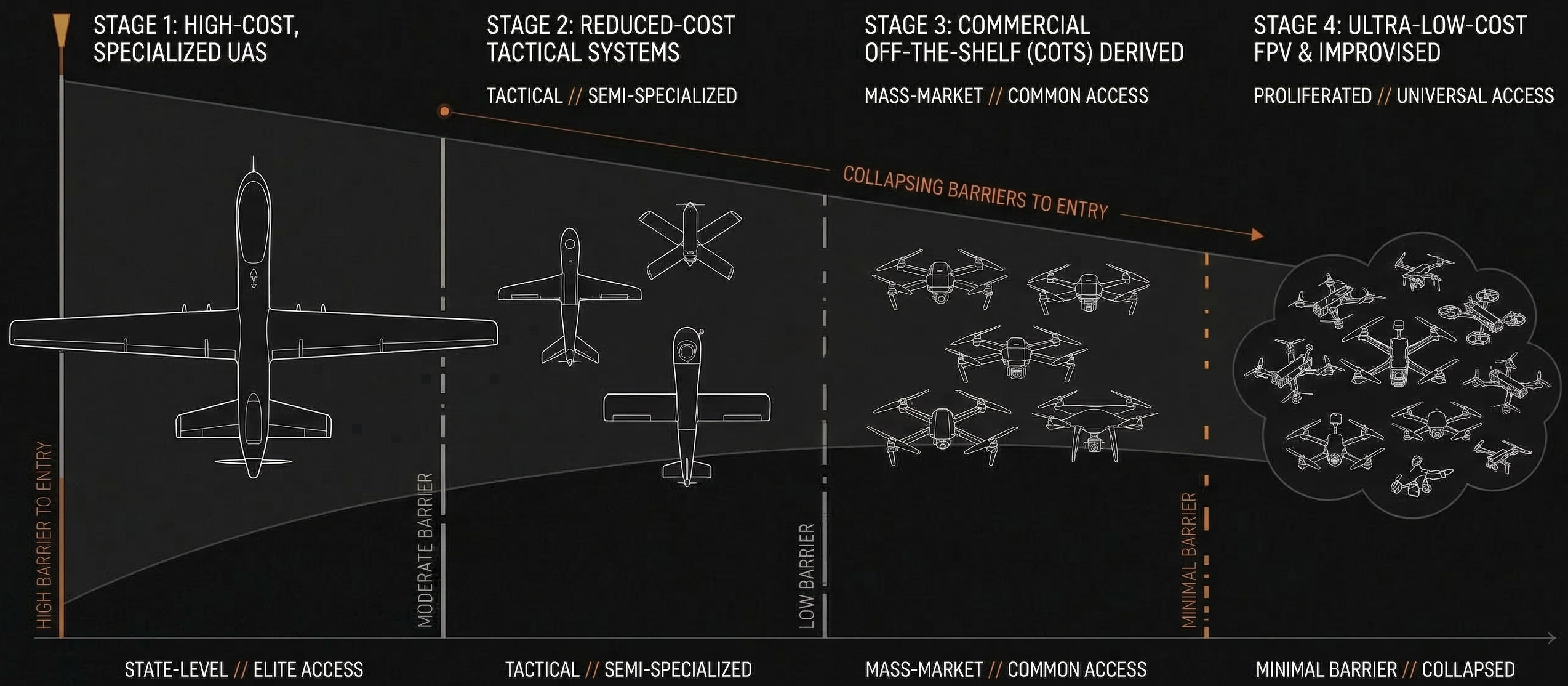
Low-cost drone threat proliferation diagram
02
Threat environment // Guidance diversity

Not every drone can be jammed

RF-dependent drones remain vulnerable to electronic attack, but tethered, autonomous, and pre-programmed systems reduce the reliability of purely soft-kill approaches. Defenders need a guidance-agnostic layer.
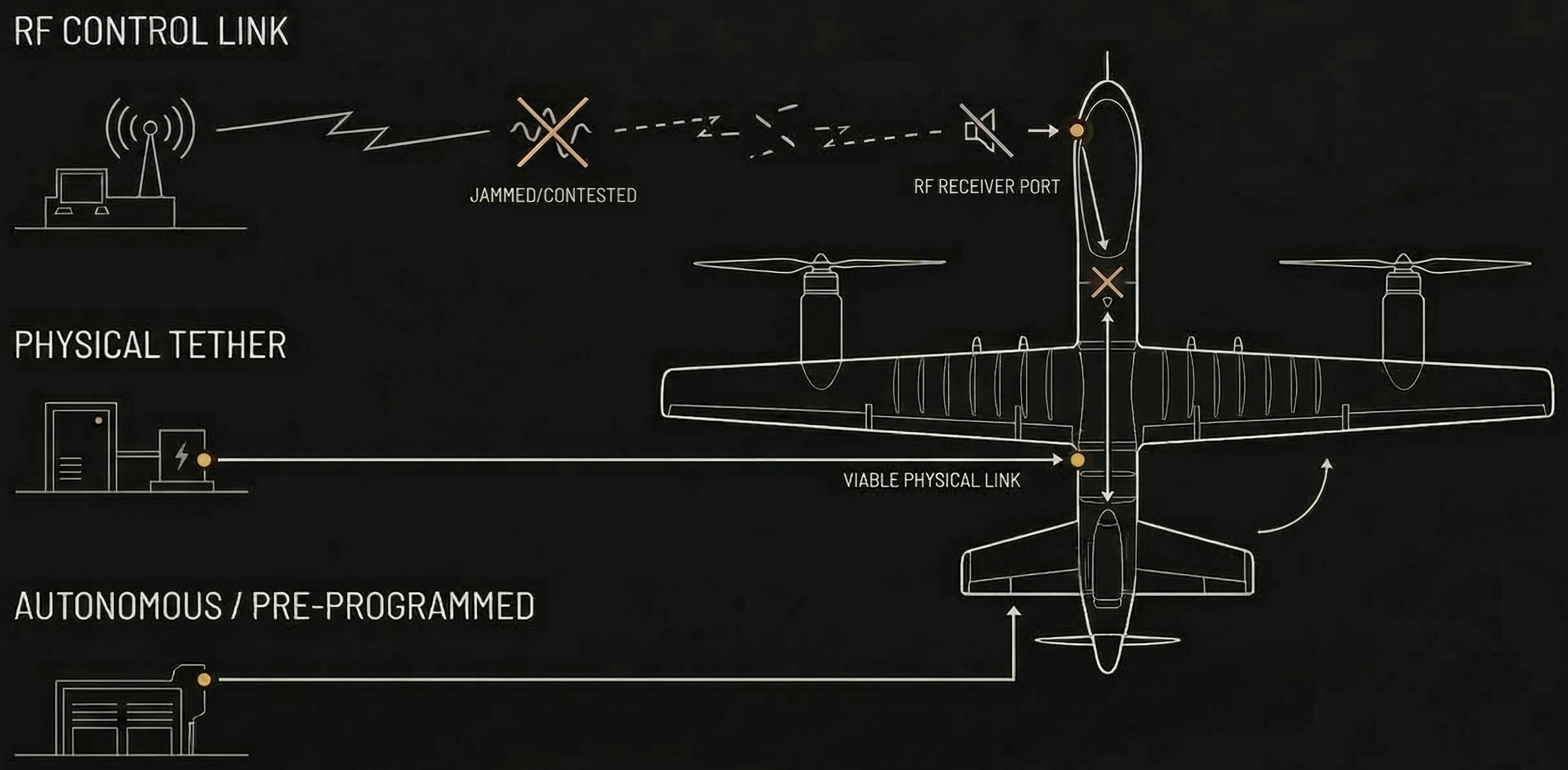
Drone guidance modes and RF-denied threats diagram
03
Threat environment // Cost exchange

Defense must scale economically

Using high-cost defense munitions against low-cost drones breaks the cost curve in the attacker’s favor. Effective defense needs sustainable engagement economics and replenishment.
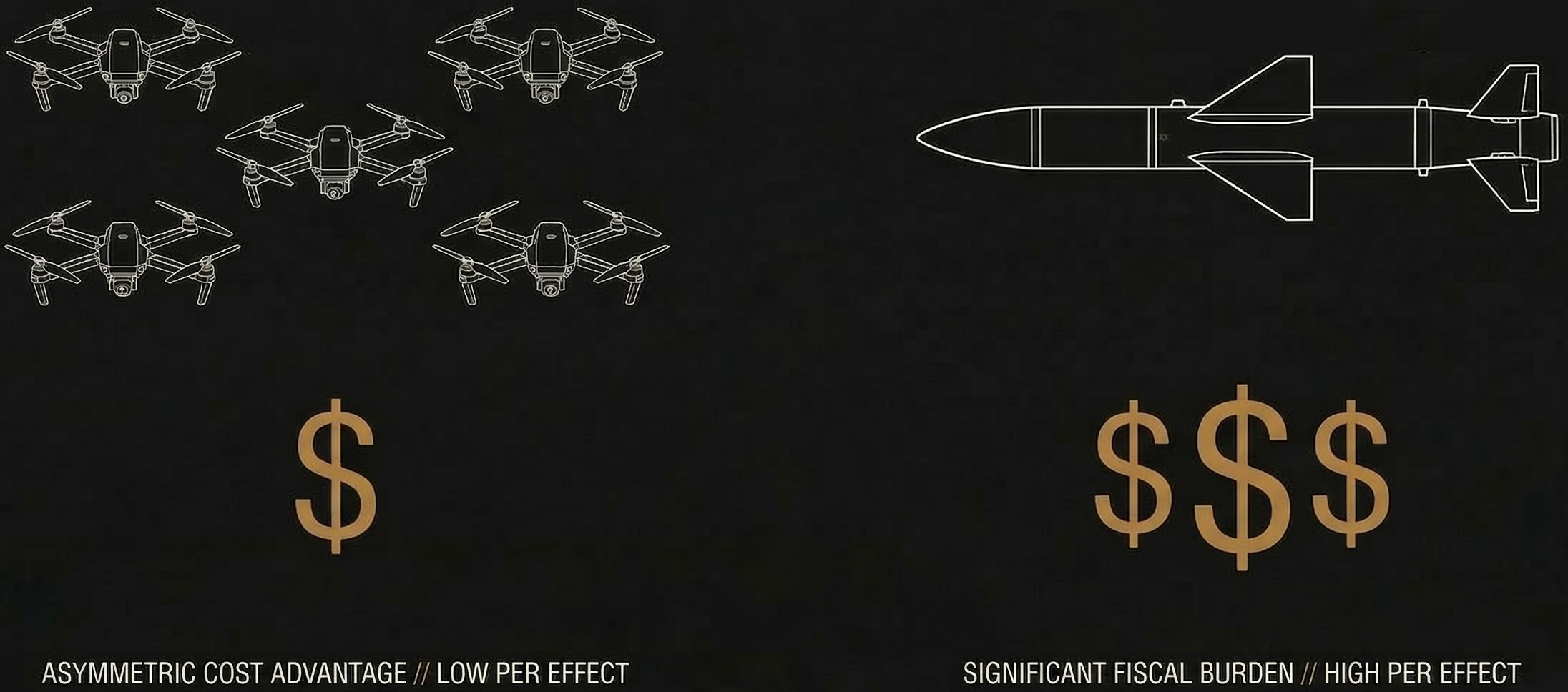
Counter-drone cost exchange comparison diagram
LAYER: FIXED-SITE + DISMOUNTED
ROLE: FIRST-LINE / LAST-LINE
AMMUNITION: INERT AGGREGATE
EFFECT: GUIDANCE-AGNOSTIC HARD-KILL
DEPLOYMENT: FACILITIES + OPERATORS

A layered drone threat requires a layered physical response.

Why kinetic defense

RockDome is built around a simple premise: when attackers can vary guidance, saturate airspace, and exploit cost asymmetry, defenders need a hard-kill layer that is practical to deploy and practical to sustain. Aegis protects facilities and infrastructure. Paper Spray gives dismounted operators a last-line option when perimeter or standoff layers are unavailable, exhausted, or ineffective.

PRINCIPLE 01

Guidance-agnostic defeat

Kinetic interception does not depend on breaking a control link. It remains relevant against RF- guided, autonomous, and tethered threats because the effect is physical, not electronic.

PRINCIPLE 02

Favorable engagement economics

By using inert, locally available aggregate as ammunition, RockDome is designed for replenishment and scale rather than expensive, specialized munitions.

PRINCIPLE 03

Layered deployment

Aegis extends protection around fixed sites. Paper Spray extends it to the individual operator. Together they support a first-line and last-line defense model.

Trade-space // Counter-UAS approaches

A physical layer for the gaps between defenses

Jamming, directed energy, missiles, and close-range weapons can all play roles in a layered counter-UAS architecture. RockDome is built around a different premise: defeat the drone by putting hard material into the propeller path, without depending on signal disruption, energy absorption, onboard electronics, or costly intercept rounds.

Approach Strength Battlefield challenge RockDome position
Jamming / EW Useful against RF-controlled drones Fiber-optic, autonomous, and pre-programmed drones may reduce effectiveness Does not depend on signal disruption
Lasers Fast, precise engagement Weather, obscurants, reflective materials, power, thermal management, and dwell-time constraints Uses physical impact instead of energy absorption
High-power microwave Can affect electronics and may support area effects Shielding, hardened electronics, conductive barriers, electromagnetic safety planning, and power demands Targets propellers, not electronics
Missiles / munitions Proven hard-kill effect High cost per shot, magazine depth, and saturation risk Uses low-cost controlled aggregate material
Shotguns Practical close-range kinetic effect Limited range, operator burden, and manual engagement demands Applies similar physical logic at system level
Products // Layered defense

Two products. One operating logic.